Introduction to Artificial Intelligence
Artificial Intelligence (AI) is no longer a futuristic concept confined to research laboratories or science fiction. It is embedded in the tools we use daily, the systems that power businesses, and the innovations shaping the global economy. From recommendation engines to autonomous vehicles, AI is transforming industries at an unprecedented pace.
To understand AI properly, it is essential to explore its major branches, how they function, and how they influence modern life. This article breaks down the core areas of AI and examines its real-world applications and future trajectory.
 Image Source: Canva
Artificial Intelligence can be categorized in multiple ways, but one of the most common classifications is based on capability.
Narrow AI, also known as Weak AI, is designed to perform a specific task. It operates within a limited scope and cannot function beyond its predefined objectives. Examples include recommendation systems, voice assistants, and spam filters. Most AI systems in use today fall into this category.
General AI, sometimes referred to as Strong AI, represents a theoretical stage where machines would possess the ability to perform any intellectual task that a human can do. This includes reasoning, problem-solving, emotional understanding, and learning across domains. While researchers are actively exploring this field, General AI does not yet exist in practice.
Superintelligent AI is a hypothetical future stage where machines would surpass human intelligence across all domains. This concept raises both excitement and ethical concerns, as it would fundamentally alter the balance between human control and machine autonomy.
Understanding these distinctions helps clarify that while AI is powerful today, it remains largely task-specific and domain-focused.
 Image Source: Canva
Machine Learning is one of the most significant subfields of Artificial Intelligence. It focuses on enabling systems to learn from data rather than being explicitly programmed for every possible scenario.
Instead of writing fixed rules, developers train algorithms on large datasets so they can detect patterns and make predictions. Machine learning models improve over time as they process more data. This approach is widely used in recommendation systems, fraud detection, predictive analytics, and search engines.
Popular programming languages like Python dominate this field because of their rich ecosystem of libraries and frameworks.
Machine Learning can be divided into supervised learning, unsupervised learning, and reinforcement learning. Supervised learning relies on labeled datasets. Unsupervised learning identifies hidden patterns in unlabeled data. Reinforcement learning focuses on decision-making through trial and error, commonly used in robotics and game AI.
Machine Learning serves as the foundation upon which many advanced AI systems are built.
 Image Source: Canva
Deep Learning is a specialized branch of Machine Learning that uses neural networks with multiple layers—often referred to as deep neural networks. These networks are inspired by the structure of the human brain and are particularly effective at processing large volumes of complex data such as images, audio, and text.
Unlike traditional machine learning models, deep learning systems automatically extract features from raw data. This eliminates the need for manual feature engineering, which significantly enhances performance in complex tasks.
Deep learning has powered breakthroughs in image recognition, speech recognition, and autonomous driving. Technologies such as facial recognition and voice assistants rely heavily on deep neural networks.
The rise of powerful GPUs and cloud computing has accelerated deep learning adoption, making it a central pillar of modern AI research and implementation.
 Image Source: Canva
Natural Language Processing (NLP) focuses on enabling machines to understand, interpret, and generate human language. It bridges the gap between human communication and computer systems.
NLP is responsible for technologies like chatbots, translation tools, sentiment analysis systems, and voice assistants. It allows machines to process text and speech in ways that mimic human comprehension.
Advanced NLP systems rely heavily on deep learning models trained on massive text datasets. These systems can analyze context, detect intent, and even generate human-like responses.
From customer support automation to content recommendation and automated summarization, NLP is transforming how businesses and users interact with technology.
 Image Source: Canva
Computer Vision enables machines to interpret and understand visual information from the world. It involves processing and analyzing images and videos to extract meaningful insights.
Applications of computer vision include facial recognition, object detection, medical image analysis, security surveillance, and autonomous vehicles.
Deep learning models have significantly improved computer vision accuracy, enabling systems to detect objects and patterns with remarkable precision. In healthcare, AI-powered imaging systems assist doctors in diagnosing diseases from X-rays and MRIs. In retail, computer vision enables cashier-less stores and smart inventory tracking.
By converting visual data into actionable intelligence, computer vision continues to redefine automation across industries.
 Image Source: Canva
When AI is integrated with robotics, it enables machines to interact with and respond to the physical world. Robotics combines mechanical engineering, electronics, and AI algorithms to create intelligent systems capable of performing complex physical tasks.
AI-powered robots are used in manufacturing, logistics, healthcare, agriculture, and even space exploration. In factories, robots perform repetitive tasks with precision and efficiency. In healthcare, robotic-assisted surgeries improve accuracy and reduce recovery time.
Reinforcement learning plays a critical role in robotic intelligence, allowing robots to learn optimal behaviors through experimentation.
The combination of AI and robotics represents one of the most impactful technological partnerships of the modern era.
 Image Source: Canva
Artificial Intelligence is deeply embedded in daily life, often operating invisibly in the background.
Streaming platforms recommend movies based on user behavior. E-commerce websites suggest products tailored to individual preferences. Smartphones use AI for facial recognition, voice commands, and predictive typing. Navigation apps calculate optimal routes using real-time traffic data.
Financial institutions rely on AI for fraud detection and credit scoring. Social media platforms use AI algorithms to curate content feeds and detect harmful material.
AI is not limited to high-tech industries; it influences education, healthcare, transportation, entertainment, and communication. Its integration into daily tools demonstrates that AI is not just an innovation—it is infrastructure.
The Future of AI
 Image Source: Canva
The future of AI holds immense promise and significant responsibility. As computing power increases and data availability expands, AI systems will become more sophisticated and autonomous.
Emerging trends include explainable AI, which aims to make machine decisions more transparent, and ethical AI, which focuses on fairness, accountability, and bias reduction. Governments and organizations are working to establish regulations that ensure responsible AI development.
AI is also expected to revolutionize fields such as personalized medicine, climate modeling, smart cities, and advanced automation. However, concerns regarding job displacement, privacy, and security must be addressed thoughtfully.
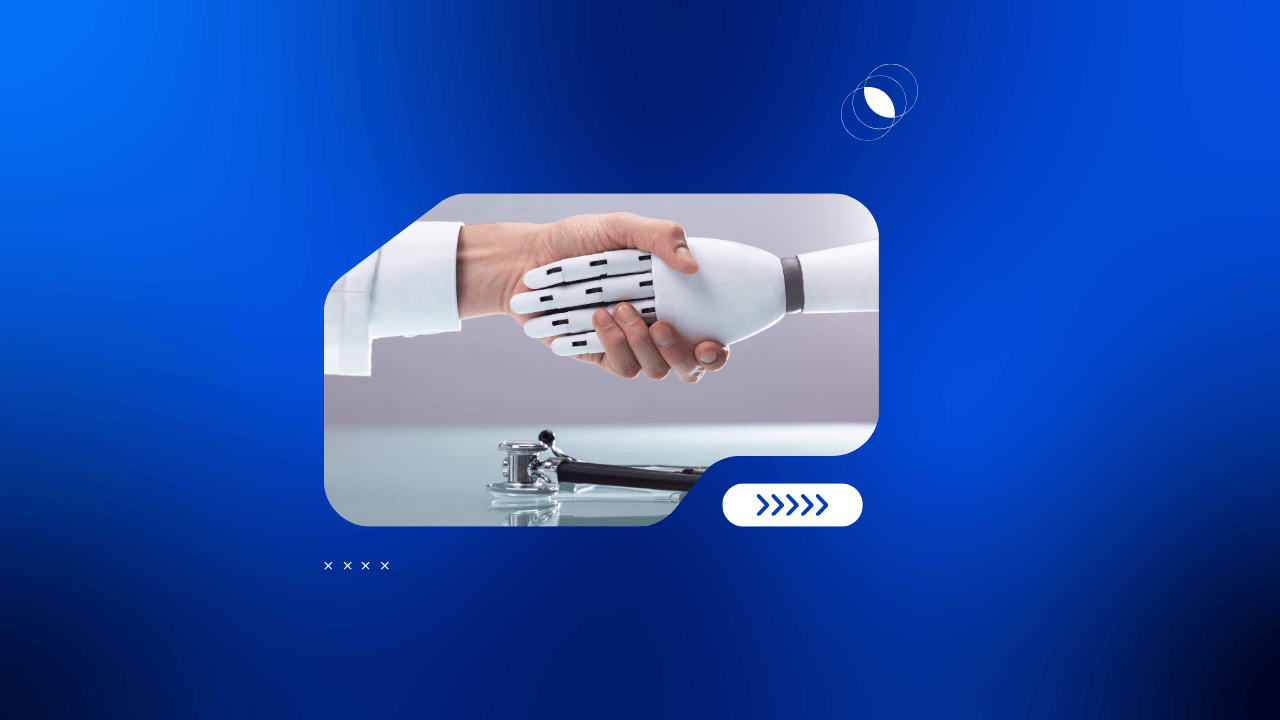
Rather than replacing humans entirely, the most realistic future scenario involves AI augmenting human capabilities. Humans and intelligent systems will collaborate, combining creativity and emotional intelligence with computational power and efficiency.
Conclusion
Artificial Intelligence is a multifaceted field encompassing Machine Learning, Deep Learning, Natural Language Processing, Computer Vision, and Robotics. Its applications already shape everyday experiences, and its future impact will likely be even more profound.
Understanding AI requires more than recognizing buzzwords; it demands awareness of its technical foundations, practical implementations, and ethical implications. As the technology continues to evolve, those who invest in learning and adapting will be best positioned to thrive in an AI-driven world.
AI is not merely a technological advancement—it is a transformative force redefining how society operates, innovates, and grows.